Why Faster Treatment Matters for Kidney Obstruction | Akeeko Advantage | April-May 2026
In this edition of Akeeko Advantage, we reflect on why faster treatment for kidney obstruction matters and how a different approach could reshape the patient experience.
Late one evening, Kirk was anchored on a vessel near Eden on the south coast of Australia when he was struck by sudden and severe abdominal pain that escalated rapidly— so intense that it became impossible to sit still or think clearly.
In the early hours of the morning, his crew rowed him 500 metres to shore in a small tender, after which he endured a further hour-long drive to the nearest hospital, where imaging confirmed a ureteric stone obstructing his kidney.
As the hospital was unable to perform the procedure required to relieve the obstruction, Kirk was transferred 370 kilometres to a tertiary centre, where he remained on the surgical waiting list while operating rooms were prioritised for other cases. Despite the severity of his pain, he waited nearly four days before finally receiving treatment.
During this time, Kirk was unable to work, leaving his partner and family to manage their riverside accommodation retreat without him.
Stories like Kirk’s occur every day around the world and highlight a persistent gap in the way care is delivered.
These delays arise not from the clinical complexity of the procedure itself, but from the workflow and infrastructure required to deliver it – a distinction that becomes clearer when examining how care is currently provided.
Why the Current Pathway Causes Delays
When a kidney stone blocks the ureter, pressure builds rapidly within the kidney, causing acute renal colic — one of the most severe forms of pain treated in emergency medicine.
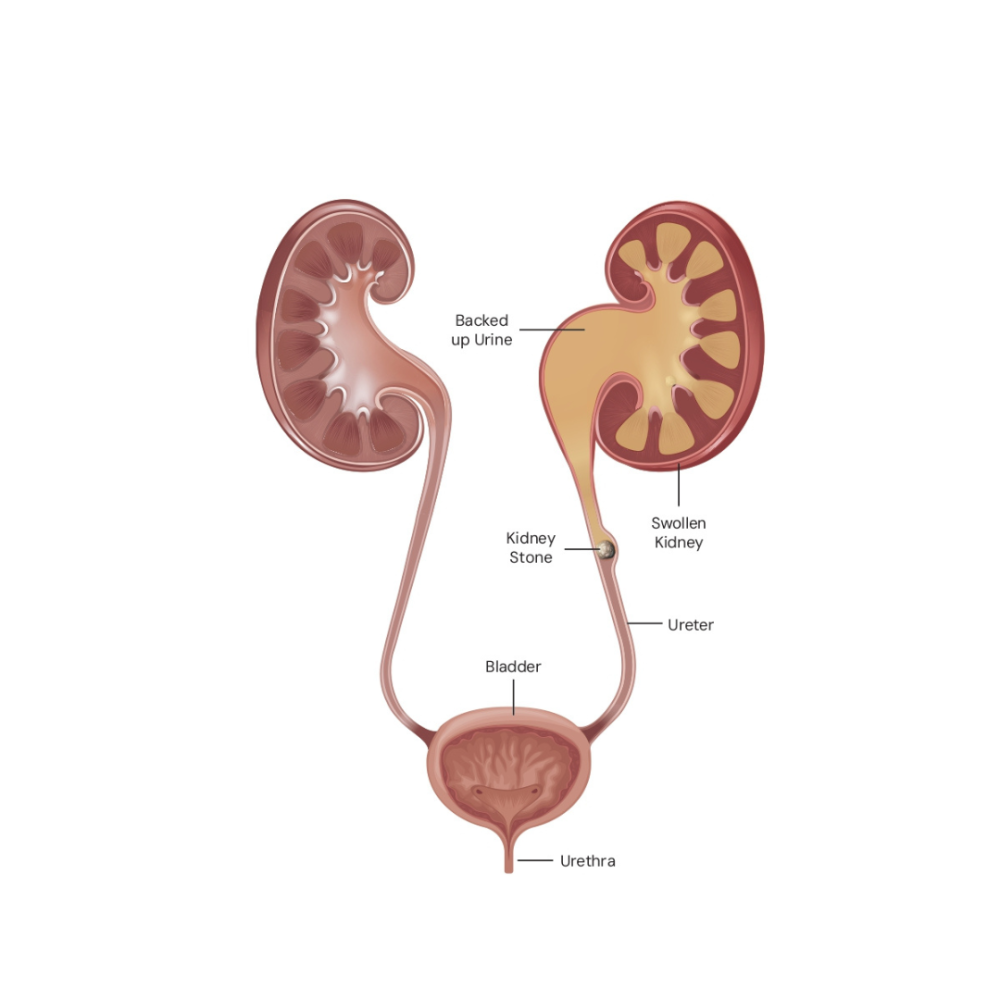
The clinical objective is simple: relieve the obstruction, most commonly by placing a ureteric stent to restore urine flow.
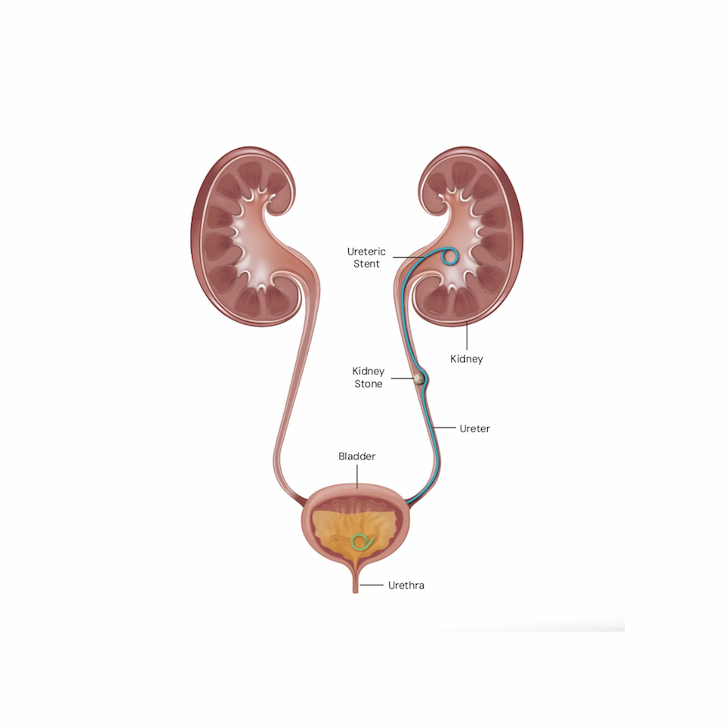
While the procedure itself is routine, it is typically delivered through a pathway that introduces delay.
Standard care requires:
Access to an operating room
General anaesthesia
Hospital admission and recovery time
As a result, patients often wait hours — and sometimes days — for treatment, with delays driven by how care is delivered rather than the procedure itself.
Moving the Procedure from the Operating Room to the Emergency Department
Recently, the Akeeko Stent Inserter™ was used in its intended clinical setting — the Emergency Department — at Geelong Hospital, where six patients have now undergone ureteric stent placement under local rather than general anaesthesia.
These procedures were performed under the Therapeutic Goods Administration (TGA) Authorised Prescriber Scheme, which enables the use of certain unapproved technologies where there is a clear clinical need.
Using the Akeeko Stent Inserter — a single-use, handheld device that integrates visualisation and guidewire control into a single device— Associate Professor Richard Grills (Director of Robotic Surgery and Director of Urological Surgery at Barwon Health) placed the stents without the need for operating room access or general anaesthesia.
In one of these cases, a patient presented to a regional Emergency Department with acute kidney stone pain requiring urgent relief of an obstructed ureter. Under usual circumstances, the patient would have been transferred to a larger hospital and admitted while awaiting access to an operating room. However, bed capacity constraints meant this pathway was not readily available.
Instead, treatment was delivered on site. A ureteric stent was placed in the Emergency Department, without the need for operating room access or general anaesthesia. The procedure was completed quickly, and the patient was able to return home shortly afterwards once the correct stent position was confirmed.
This case highlights how the Akeeko approach may support timely treatment, avoid unnecessary admission, and navigate access challenges — particularly in regional settings.
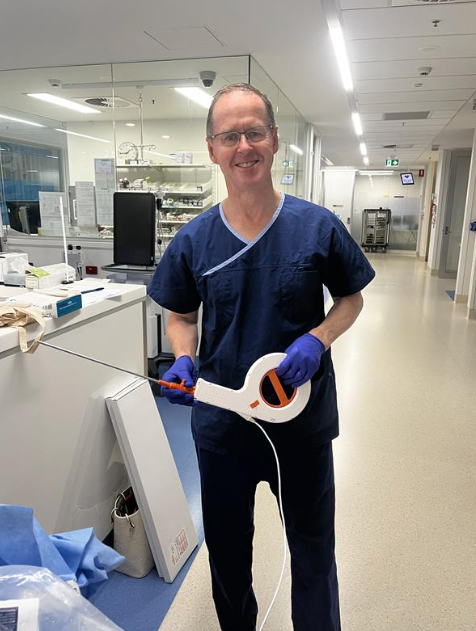
Dr Richard Grills with the Akeeko Stent Inserter™
These cases represent an early step toward a different treatment pathway — one where urgent kidney decompression can be delivered more immediately and in a more accessible clinical setting. They also provide early real-world evidence of how the procedure can be performed in this setting, supporting broader adoption and future regulatory submissions.
Akeeko is expanding clinical use of the device under the TGA Authorised Prescriber Scheme, working with clinicians across additional hospital sites in Victoria, New South Wales, and Western Australia. This early deployment supports direct engagement with clinicians and health services, including those responsible for funding and adopting new technologies, while establishing a clear pathway to adoption following regulatory clearance. Akeeko is on track for formal regulatory submissions in the United States (FDA) and Australia (TGA) in late 2026.
What this Means
By simplifying ureteric stenting and enabling delivery outside the operating room, the Akeeko approach has the potential to improve patient experience, support clinicians in delivering timely care, and reduce pressure on hospital resources.
Patient Benefits:
Faster relief from severe pain
Avoidance of general anaesthesia
Quicker recovery and earlier return home
Less time away from family and work
Clinician Benefits:
Greater control over urgent care workflows
Reduced reliance on late-night operating lists
A more streamlined approach to decompression
Healthcare System Benefits:
Reduced pressure on operating room capacity
Lower hospital costs
Fewer inpatient bed days
Around the World with Akeeko
Over recent months, and in the months ahead, Akeeko is engaging with clinicians, researchers, and industry partners at major international forums as we continue to build awareness of the Akeeko Stent Inserter.
USANZ Annual Scientific Meeting – February 2026 Akeeko exhibited at the Urological Society of Australia and New Zealand Annual Scientific Meeting, engaging with clinicians across Australia and New Zealand and exploring how the Akeeko Stent Inserter may improve the management of kidney obstruction.
LSI USA Emerging MedTech Summit – March 2026 At the LSI USA Emerging MedTech Summit in California, Akeeko introduced the Akeeko Stent Inserter to global MedTech leaders and investors, expanding awareness within the US innovation ecosystem. Akeeko was also selected to present as part of a highly competitive cohort of emerging companies.
MedTech Ignite Innovation Pitch Challenge (MTAA) – March 2026 Akeeko was selected as one of just four companies to pitch at the MedTech Ignite Innovation Pitch Challenge, hosted by the Medical Technology Association of Australia (MTAA), bringing together investors, clinicians, and industry leaders to showcase emerging MedTech innovation.
American Urological Association (AUA) Annual Meeting – May 2026 Akeeko will attend the American Urological Association Annual Meeting in Washington, DC — one of the world’s largest gatherings of urologists — to continue engaging with the global clinical community. Akeeko has also been selected to present at the AUA Innovation Nexus Forum, a curated showcase of companies recognised for the clinical relevance and potential impact of their innovations.
Thank You
To the clinicians, advisors, investors, and supporters contributing to Akeeko’s journey — thank you.
At its core, this work is about improving how care is delivered. The Akeeko Stent Inserter is designed to simplify ureteric stenting for acute renal colic, benefitting patients, clinicians, hospitals, and payers.